- Project
- Star-Net
- Sector
- Property management · Geneva
- Services
- Internal system, Client portal, Manual and training
- Year
- 2026
The inbox of a concierge company became a ticket system that organises itself.
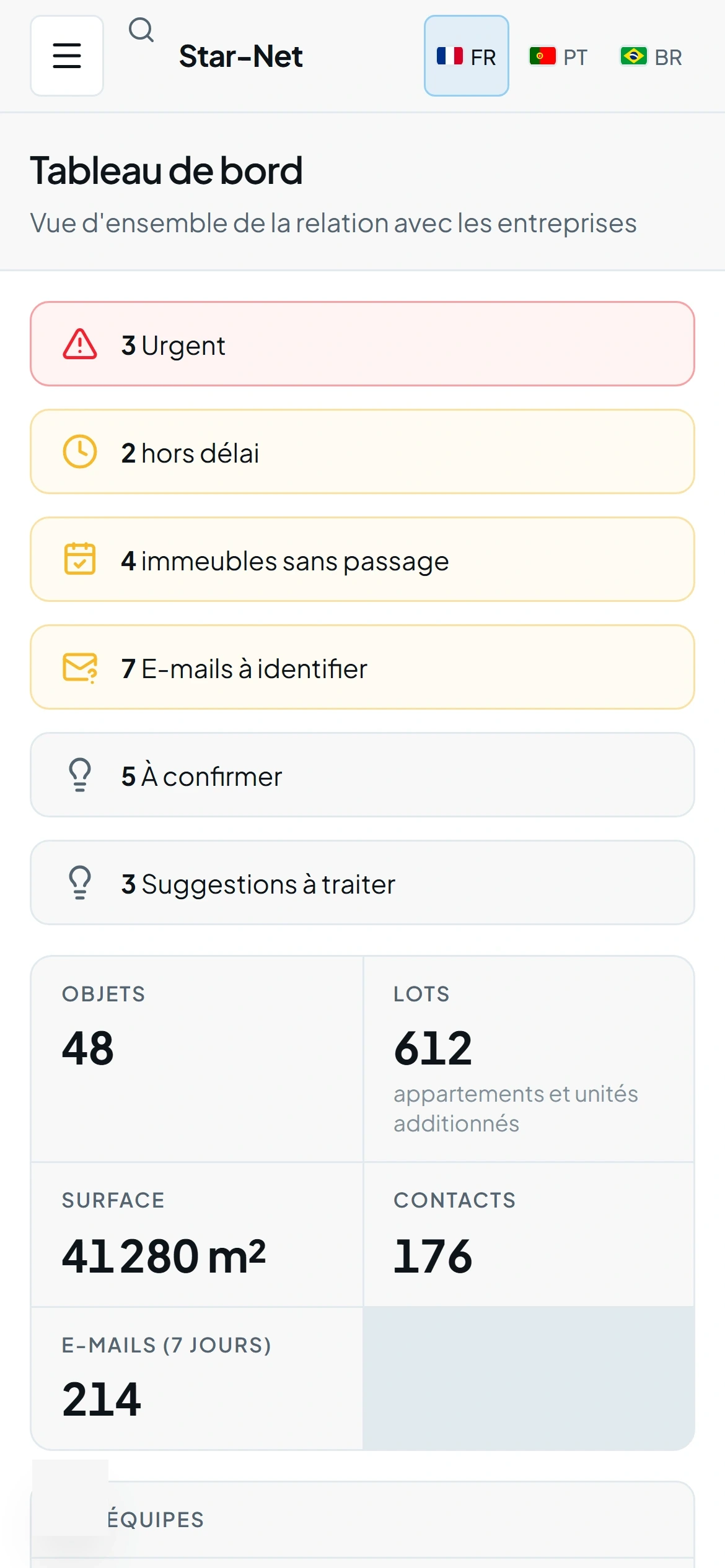
Star-Net looks after buildings, condominiums and properties in the Geneva area. Every day emails land in the company inbox: a property manager reporting a leak, a building trustee asking for an extra cleaning, an invoice, a complaint.
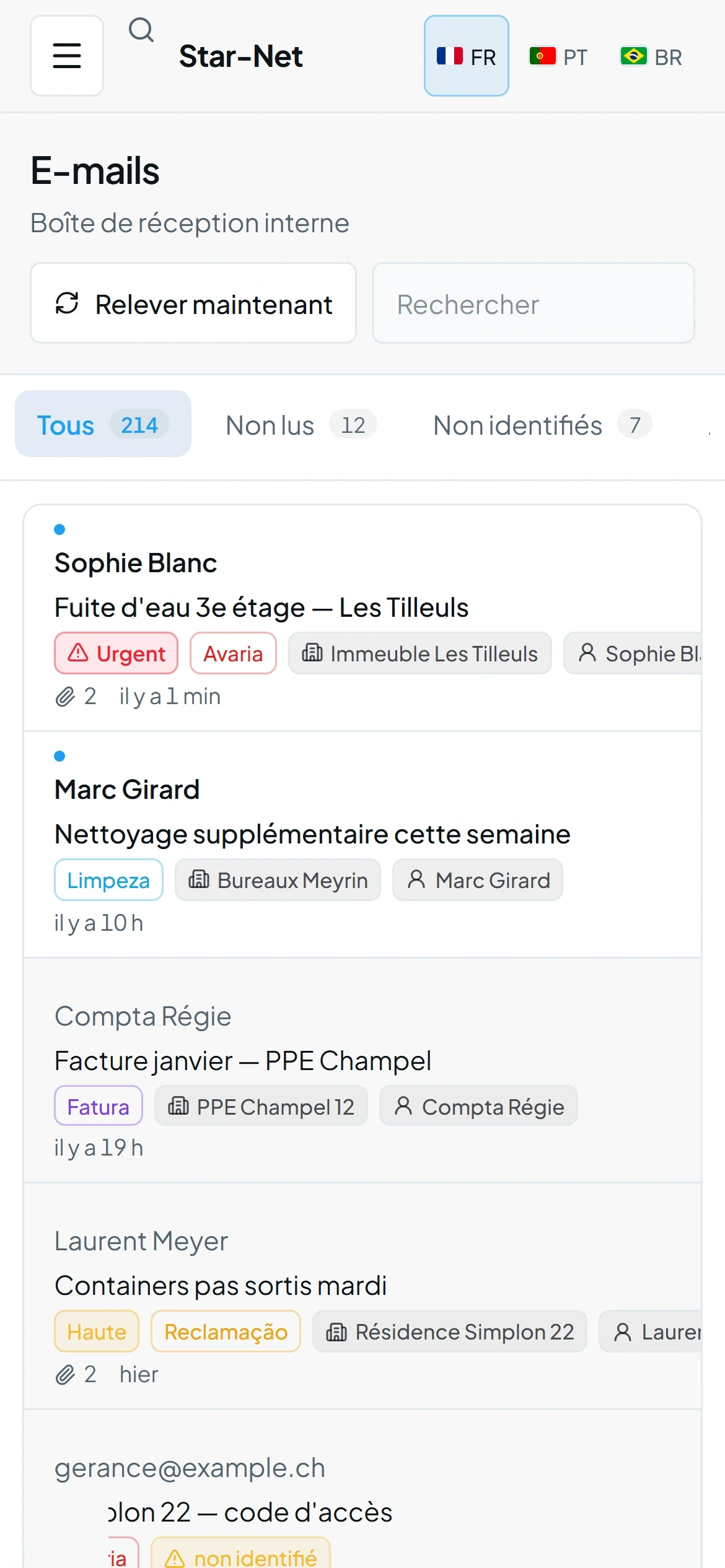
Without a system, that is an inbox with hundreds of messages in five languages, where someone searches by hand for which building it is about and who needs to handle it. The team's job was finding, not solving.
The challenge
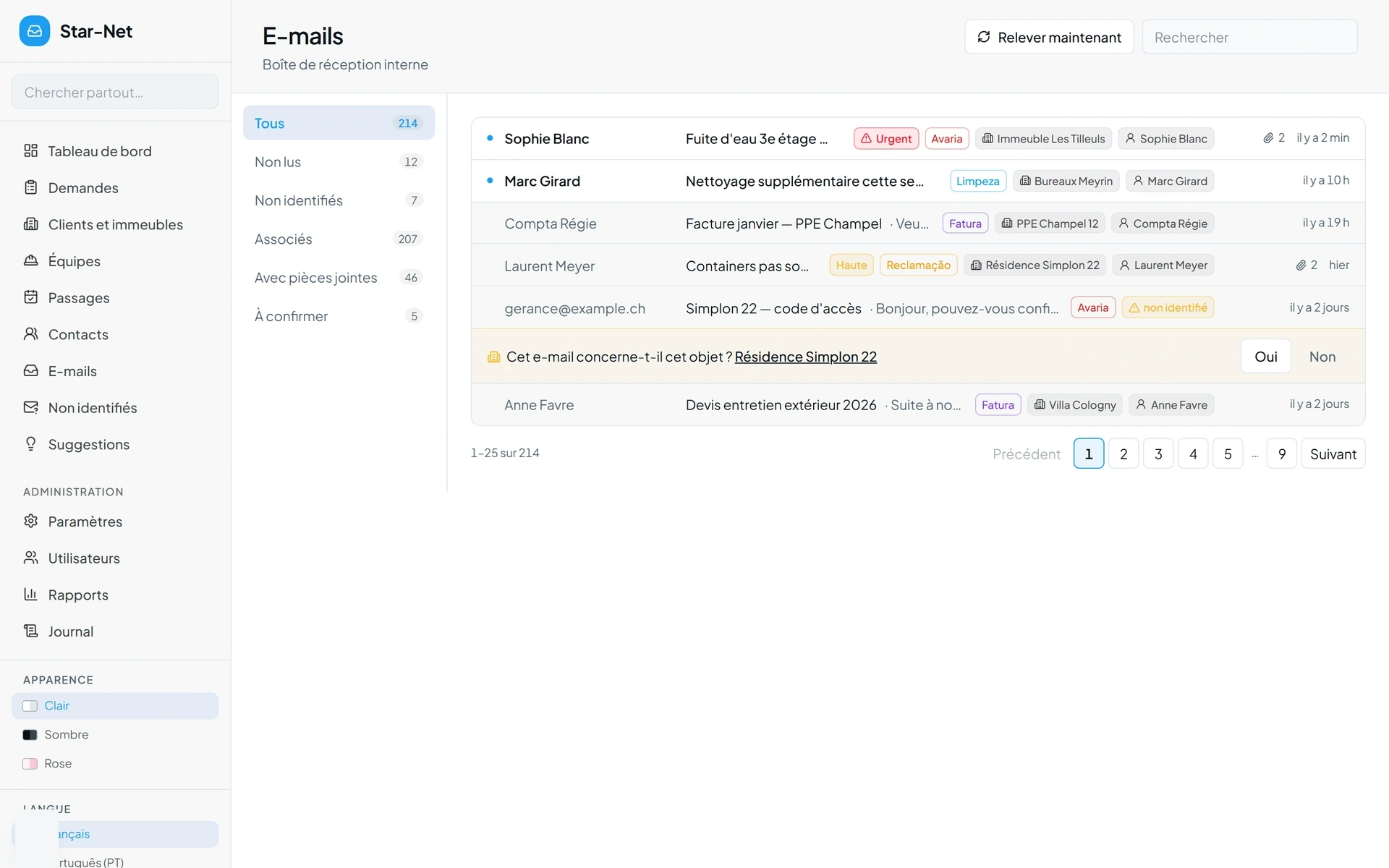
- Identify which client and which property each email is about, knowing that nobody writes the building's official name: they write its nickname.
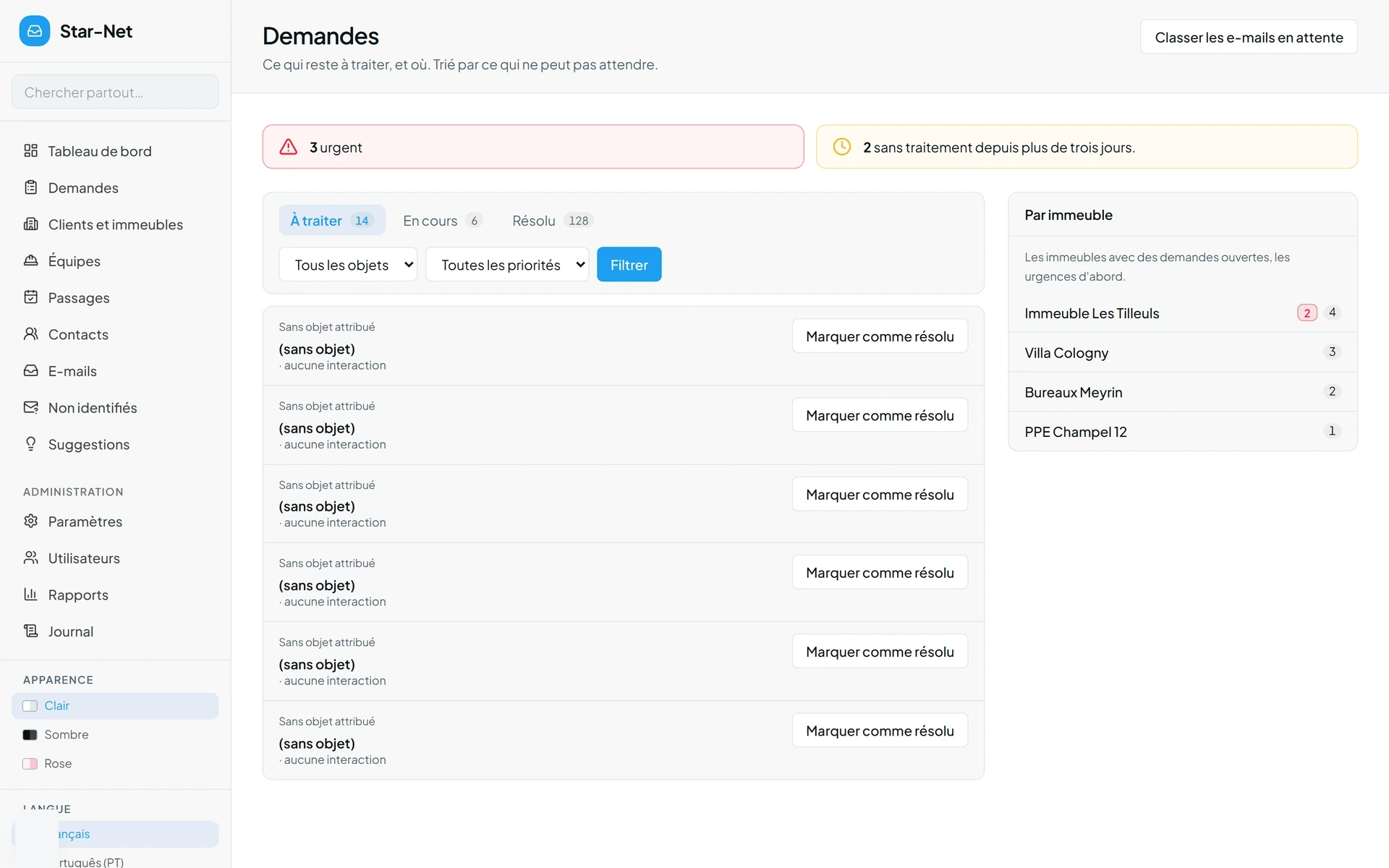
- Classify type and urgency on its own, because an urgent breakdown cannot wait as long as an invoice.
- Work in five languages, with different teams in each one.
- Prove to the client that the team was at the building on the contracted days, without relying on anyone's word.
- Take the phone call out of the middle: today someone rings to confirm which property it is before sending the team.
The solution
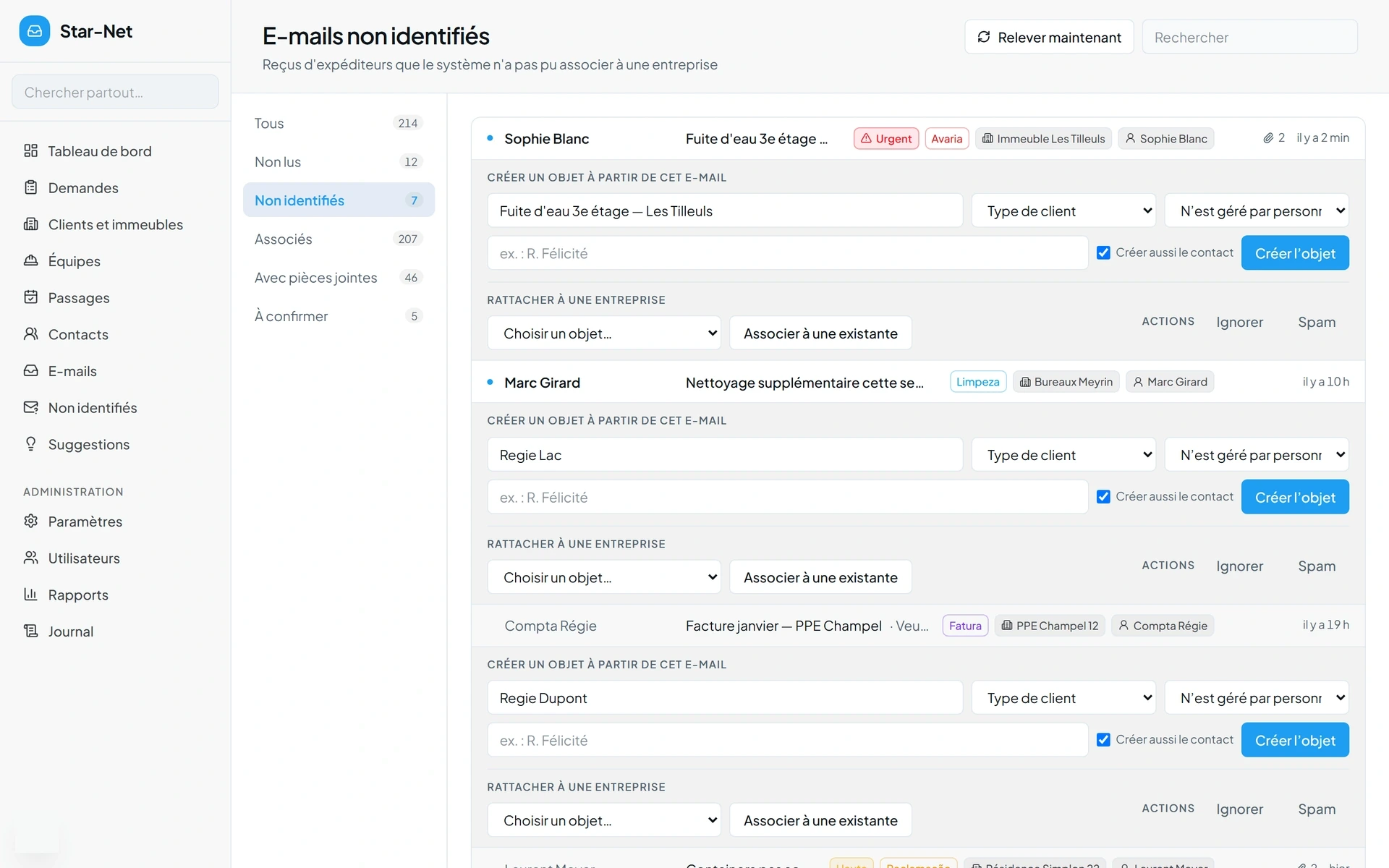
The system reads the inbox on its own every thirty seconds and asks three questions of each message: who it is from, which property it is about, and what kind of request it is. Identification has four levels, in this order: the contact's email, the company's general email, the thread the message replies to, and the domain. When it has a suspicion but not certainty, it does not decide alone: it asks on the suggestions screen. And every correction made by hand becomes knowledge, so on the next similar message it already knows.
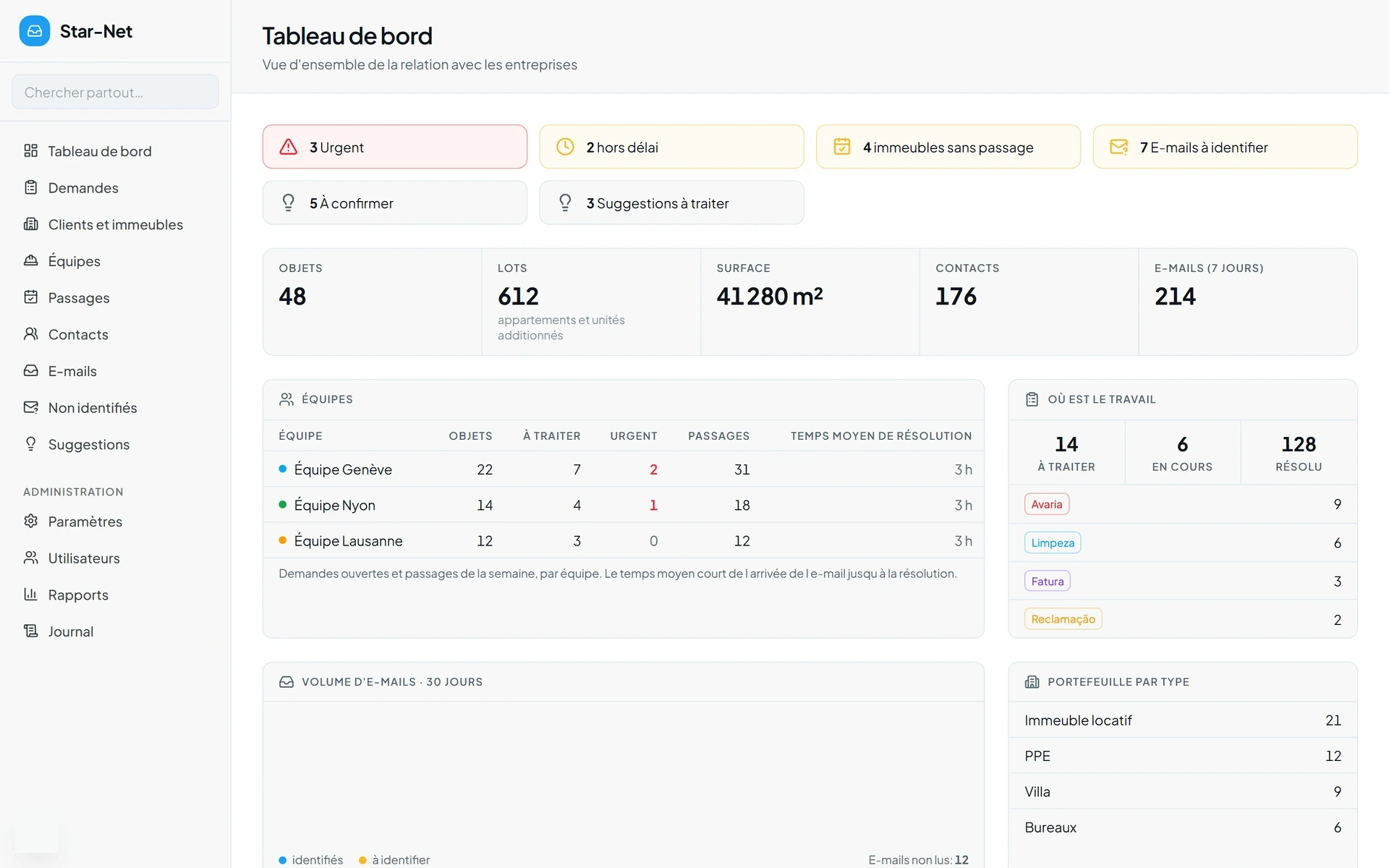
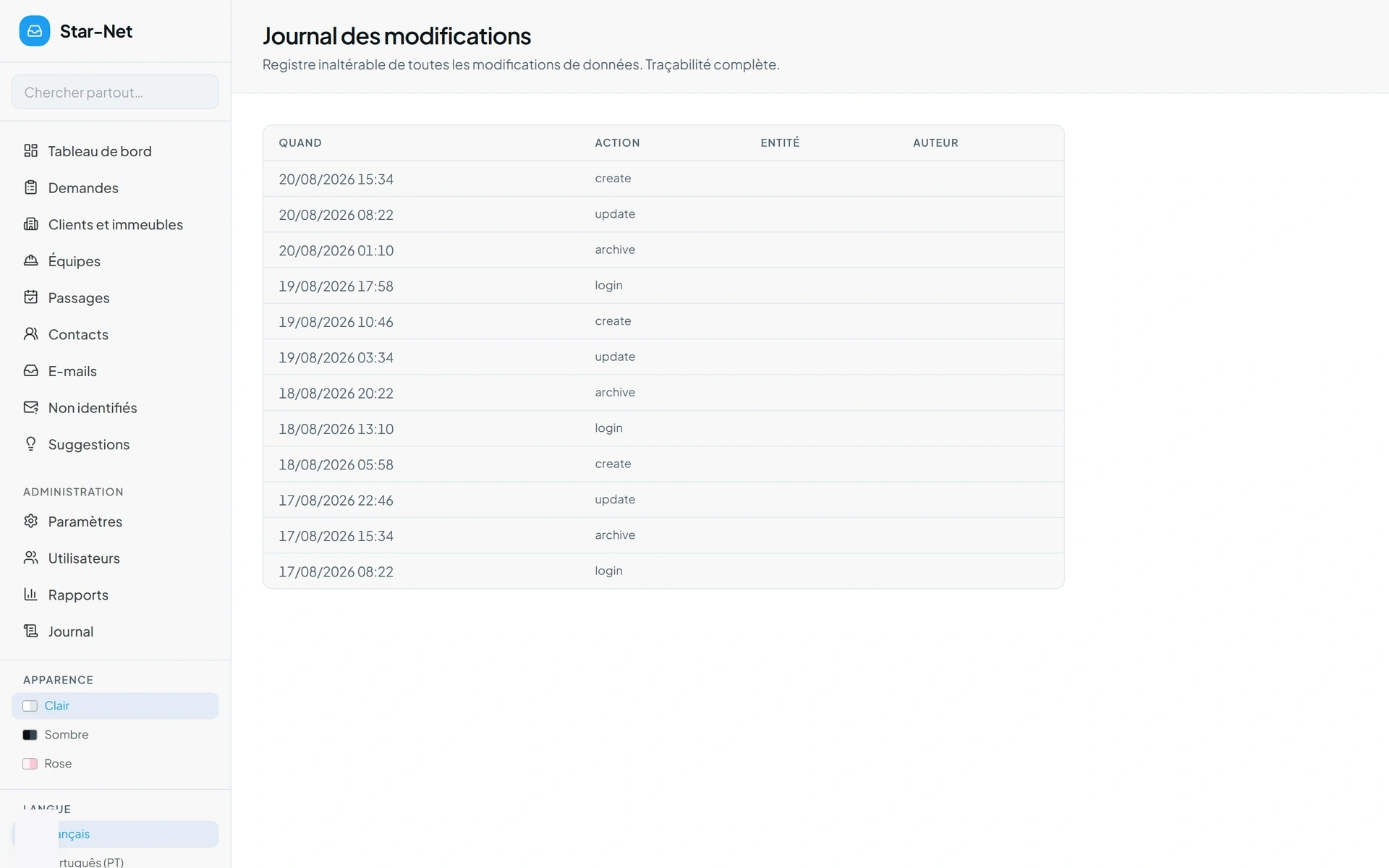
On top of that came the Property Portal: one link per building, which Star-Net sends the property manager once and that stays. Whoever is at the property reports in twenty seconds, with a photo and a location; the request arrives already identified on the other side; and the client follows the team's visits without phoning. Inside, the system closes with an immutable audit trail, reports, export and revocable sessions.
Result
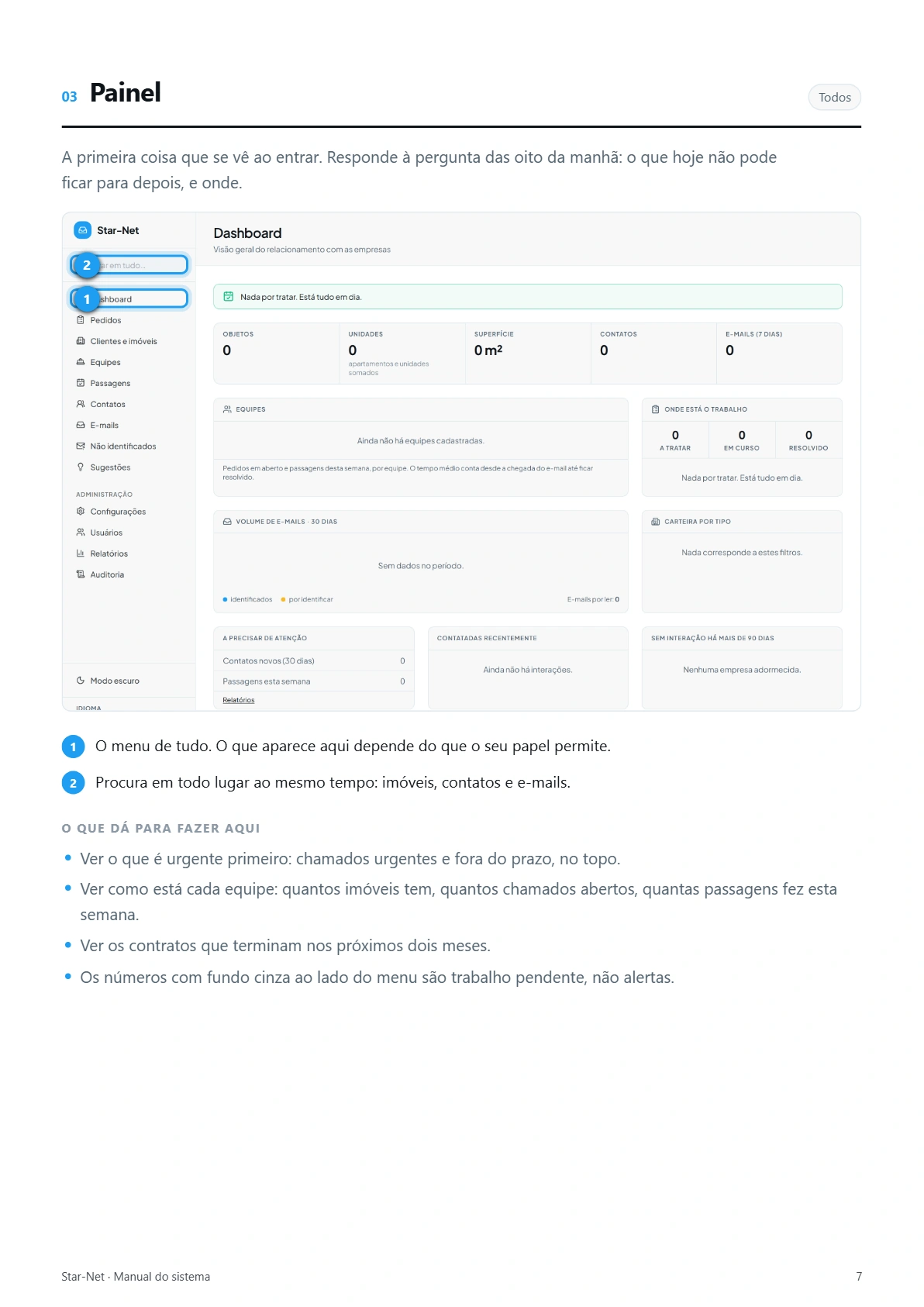
Delivered with a complete system manual, screen by screen, with a screenshot and every button numbered and explained, in Portuguese and in Brazilian Portuguese.
Stack
- Next.js
- Supabase
- IMAP/SMTP
- Vercel
- Prisma
The most important field in the system
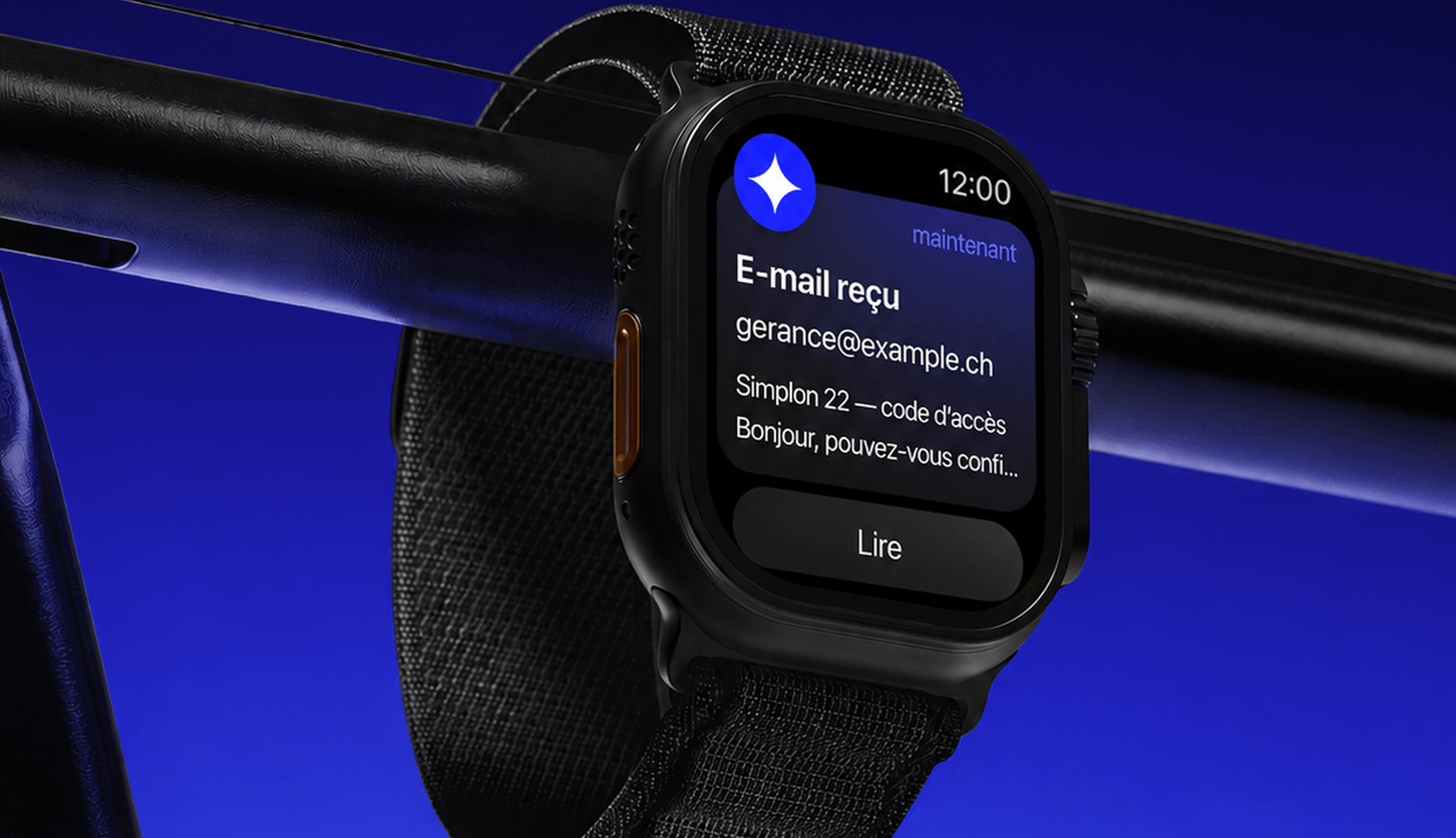
The property registration form has a field called alternative designations. That is where the short name goes, the address without a number, the nickname the team actually uses. It looks like bureaucracy; it is the opposite: it is that field that makes an email dashed off saying "Simplon 22" land on the right building. An identification system is only good when it knows the informal language of the person writing.
Connecting the mailbox
The connection screen explains first how to generate an app password in Google and only then asks for the password, because the most common mistake is pasting the normal Gmail password. An interface that anticipates the user's mistake saves more support than any help screen.
Where the data lives
Database in Zurich and application in Frankfurt: Swiss client, data inside Europe. Access by individual account, a revocable thirty-day session, lockout after five wrong attempts and an audit trail not even the administrator can erase.